Demographic Shifts and Live Casino Participation: Contrasts Between Urban and Rural Communities
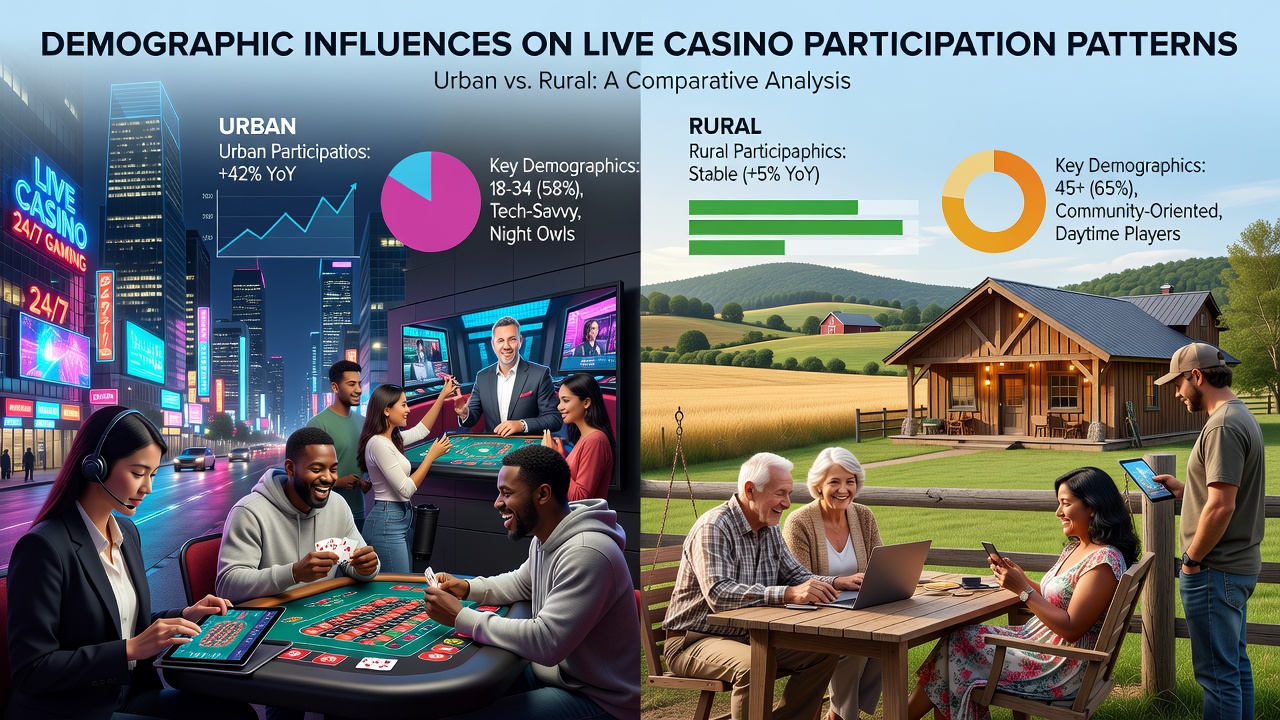
Live casino participation reflects clear demographic patterns when researchers compare urban and rural populations, with data showing distinct differences in engagement levels tied to age distributions, income brackets, education levels, and broadband availability. Studies from various regions indicate that urban residents tend to access live dealer platforms more frequently due to higher population densities and established digital infrastructure, whereas rural participants often navigate participation through different pathways shaped by geographic isolation and varying household compositions.
Population Density and Access Patterns
Urban centers host younger working-age adults in greater proportions, and this group drives much of the observed activity in real-time casino environments according to demographic analyses released through government statistical agencies. Rural areas, by contrast, feature higher percentages of older residents whose participation rates align more closely with traditional gaming formats when connectivity permits, yet live casino sessions occur less often overall because of infrastructure limitations that persist into 2026.
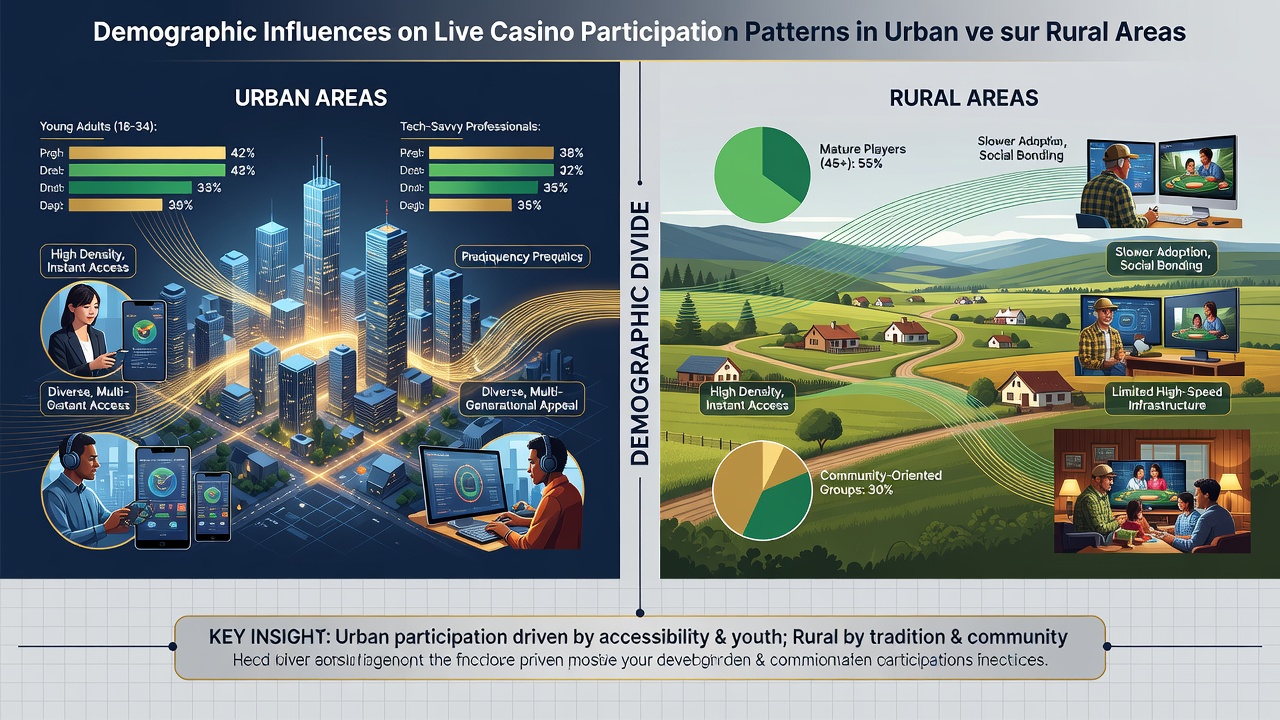
Research indicates broadband penetration rates remain substantially lower in countryside regions, which directly influences the feasibility of uninterrupted live streaming required for dealer interactions; one analysis from Statistics Canada highlighted how rural households in several provinces reported connection speeds insufficient for consistent platform use during peak evening hours.
Income, Education, and Engagement Variables
Income levels correlate with participation frequency across both settings, though the relationship manifests differently. Urban professionals with mid-to-high earnings demonstrate consistent session durations on live tables, while rural participants with comparable incomes often limit activity to shorter intervals because of data costs and device constraints. Education attainment further separates patterns, with university-educated individuals in cities showing greater comfort navigating app-based live environments compared to those in rural zones who may prioritize land-based options when available.
Figures from the Australian Bureau of Statistics reveal that educational attainment above secondary level associates with elevated digital gambling engagement in metropolitan postcodes, whereas rural postcodes exhibit flatter participation curves even among higher-educated residents due to service availability gaps.
Age Demographics and Platform Preferences
Age cohorts produce some of the sharpest divides. Adults aged 25-44 cluster heavily in urban live casino data sets, drawn by social features and multi-table options that suit denser social calendars, while rural cohorts skew older and display steadier but lower-volume engagement concentrated among retirees who value familiar interfaces over novelty. Reports compiled ahead of June 2026 updates from regional gaming oversight bodies note these age-based splits have held steady despite incremental improvements in rural network coverage.
Connectivity Infrastructure as a Mediating Factor
Broadband rollout programs continue to narrow gaps, yet observers note that urban fiber and 5G density still outpace rural wireless upgrades, creating persistent barriers for live video requirements. Participants in countryside locations frequently encounter latency issues during peak hours that disrupt dealer interactions, leading some to shift toward recorded or automated alternatives when live options become unreliable. Data from the U.S. Department of Commerce documents these infrastructure disparities through county-level mapping that continues to inform policy discussions into the current period.
Household Composition and Time Allocation
Household structures also shape participation rhythms. Urban single-person and dual-income households allocate more evening hours to live sessions, whereas rural multi-generational homes often share devices and schedules, resulting in more fragmented usage patterns. Researchers tracking these variables find that family size and work schedules tied to agriculture or small business operations influence when rural users log on, typically favoring weekend blocks over weekday evenings common in city environments.
Conclusion
Demographic variables including age, income, education, and connectivity infrastructure produce measurable differences in live casino participation between urban and rural populations. Government statistical releases and academic tracking continue to document these patterns through 2026, offering ongoing insight into how population characteristics intersect with technological access to shape engagement across geographic settings.