Seasonal Dynamics Shaping Progressive Jackpot Growth in Online Gambling Networks
Xander Becker · Aug 23, 2026
Seasonal Dynamics Shaping Progressive Jackpot Growth in Online Gambling Networks
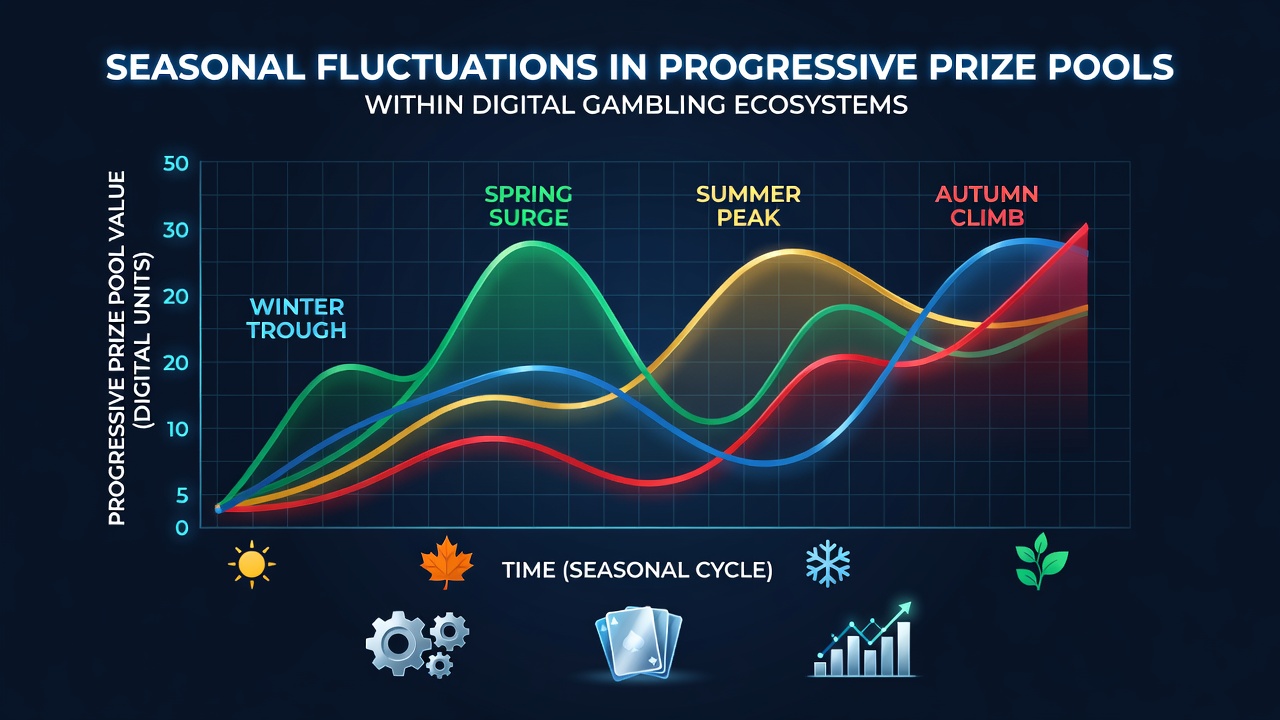
Progressive prize pools in digital gambling ecosystems expand and contract in response to predictable seasonal cycles that influence player participation rates and contribution volumes, with data from multiple jurisdictions showing clear patterns tied to calendar events rather than random variation.
Researchers tracking contributions across major platforms note that pools typically accelerate during colder months when indoor activities rise, while summer periods often bring slower growth because outdoor alternatives compete for attention. These shifts appear consistently in aggregated operator reports from North America and Europe, where average daily increments to shared jackpots rise by measurable margins between November and February compared with June through August.
Winter Acceleration and Holiday Contributions
December stands out as a peak period because festive promotions and extended leisure time drive higher session volumes, which in turn funnel larger percentages of wagers into progressive meters. Observers at several European operators documented that pools linked to popular reel titles grew 18 percent faster in the final quarter of 2025 than in the preceding three months, a pattern repeated across multiple networks. The same datasets indicate that January maintains elevated levels even after holiday spending tapers, as players return to routines that include regular digital play.
August 2026 provides a contrasting snapshot. Mid-summer figures released by the Nevada Gaming Control Board revealed that progressive contributions across monitored online platforms dipped 12 percent below the annual average for that month, coinciding with travel peaks and outdoor event schedules. Those who analyzed transaction logs found that session lengths shortened while the number of active accounts remained stable, resulting in fewer coins added to shared pots each day.
Summer Dips and Regional Variations
Summer slowdowns do not affect every region equally. Platforms serving Canadian markets, where indoor gaming retains popularity during warmer months, show milder reductions than those focused on southern U.S. states. A report compiled by the Ontario Lottery and Gaming Corporation highlighted that progressive meters in that province declined only 7 percent during July and August 2025, whereas comparable systems in Arizona registered drops closer to 15 percent over the same window.
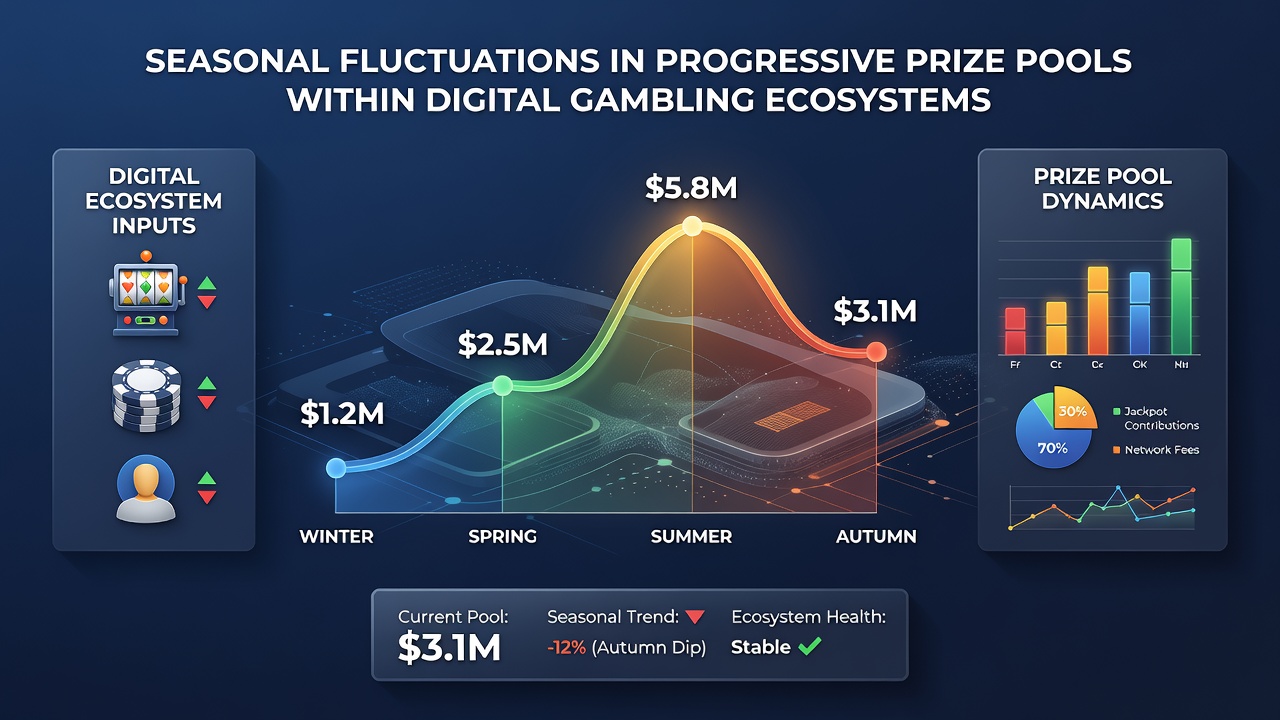
These regional differences stem from climate, cultural calendars, and competing entertainment options rather than changes in game mechanics themselves. Analysts point out that when temperatures climb, mobile users shift toward shorter, casual sessions that contribute less per play to progressive systems, whereas desktop or console-based play in colder climates sustains longer engagements that accumulate faster.
Shoulder Seasons and Predictable Recovery
March through May and September through November function as transition periods where pools regain momentum at steady but unspectacular rates. Data aggregated by the Australian Communications and Media Authority for the 2025 fiscal year showed incremental growth of roughly 9 percent during both shoulder intervals, enough to offset summer losses yet below the winter surge. Operators use these windows to adjust marketing calendars, introducing limited-time events that encourage consistent contributions without relying on extreme weather.
One longitudinal study conducted by researchers at the University of Nevada, Reno tracked ten major progressive networks over three years and confirmed that seasonal coefficients remain stable year after year once normalized for total player count. The findings suggest that fluctuations arise primarily from behavioral patterns rather than alterations in prize mechanics or regulatory adjustments.
Implications for Pool Management
Operators respond to these recurring cycles by modulating seed amounts and contribution percentages ahead of anticipated high or low periods. When winter acceleration is expected, some networks temporarily lower the percentage skimmed from each wager to prevent runaway growth that could trigger oversized payouts before sufficient reserves accumulate. Conversely, summer months sometimes see increased contribution rates to maintain pool visibility and player interest even as participation softens.
Regulatory filings from multiple jurisdictions indicate that transparent reporting of these adjustments helps maintain compliance while preserving the integrity of shared prize structures. The patterns documented through 2026 continue to align with earlier multi-year observations, reinforcing the conclusion that seasonal dynamics form a reliable framework for forecasting pool behavior across digital gambling ecosystems.
Conclusion
Seasonal fluctuations in progressive prize pools reflect measurable shifts in player behavior driven by calendar and climate factors, with winter months consistently producing faster accumulation and summer periods showing measurable slowdowns. Data from regulatory bodies and academic studies confirm these cycles repeat reliably across regions and platforms, allowing operators to plan contribution rates and promotional timing accordingly. The evidence gathered through August 2026 demonstrates that these patterns remain stable and predictable when tracked over multiple years.